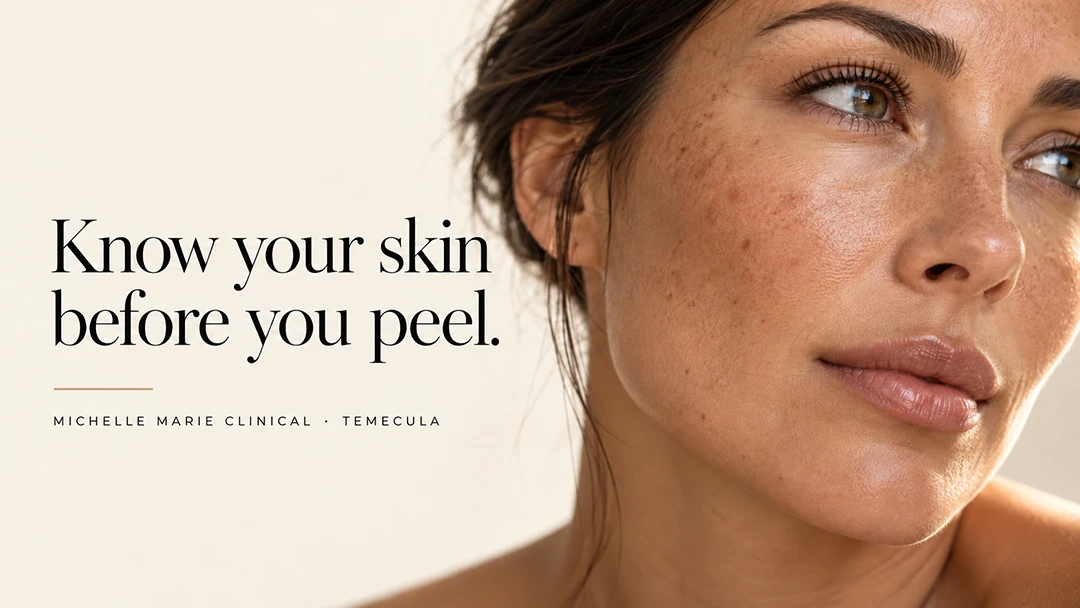
Peel season can be a useful time to revisit your skin goals, especially if summer has left you with dark spots, uneven tone or lingering acne marks. But choosing a chemical peel should begin with understanding your skin—not deciding how much you want to shed.
At Michelle Marie Clinical in Temecula, treatment planning starts with skin-barrier health, preparation and your specific concerns. Some peels cause little or no visible flaking, while others involve more noticeable shedding and recovery time. Your response will depend on the treatment and your skin.
Why fall can be a practical time for chemical peels
If fall brings fewer beach days and less outdoor activity, it may be easier to follow the sun-protection and recovery requirements of a peel. Still, the season alone does not determine whether treatment is appropriate. In Southern California, sun exposure remains relevant year-round.
Recent tanning, sensitivity, your home routine and your ability to follow aftercare are more important factors than the calendar. Daily sun protection is essential before and after treatment.
Not all discoloration is the same
Brown spots and red marks can look similar, but they may have different causes and require different approaches. The patterns below provide context, but an examination and skin history are needed for an accurate assessment. A photo alone cannot confirm the diagnosis.
PIH: dark marks after acne or irritation
Post-inflammatory hyperpigmentation, or PIH, develops after inflammation or injury. Acne, picking, irritation and other skin conditions can leave brown or gray-brown marks as the skin heals.
Inflammation stimulates melanin production. Pigment may remain in the epidermis or settle deeper in the dermis, where it often improves more slowly. Managing active acne and irritation helps prevent new marks. Carefully selected peels may improve surface pigment, but additional irritation can worsen PIH. [1]
Melasma: patches with several contributing factors
Melasma often appears as brown or gray-brown patches on both sides of the face, including the cheeks, forehead and upper lip. Genetics, hormones, ultraviolet light and visible light can all contribute.
Because melasma tends to recur, it requires ongoing management. A peel may be one part of a broader plan, but it does not eliminate the tendency for pigment to return. Sun protection, appropriate home care and careful treatment selection are important. Tinted sunscreen with iron oxides may provide added protection against visible light. [2]
Freckles: genetics and sun exposure
Freckles are small, flat tan-to-brown spots influenced by genetics and sun exposure. They often darken in the sun and may become less noticeable during less sunny months.
Freckles differ from persistent sun spots and do not need treatment simply because they are visible. Any cosmetic procedure should reflect your goals and follow a proper skin assessment. [3]
Sun spots: lasting effects of UV exposure
Sun spots, also called solar lentigines, are flat tan or brown marks that commonly develop on areas exposed to the sun over time. Unlike freckles, they often remain visible throughout the year.
Selected chemical peels may improve their appearance, but spots should be assessed before treatment. A new, changing or unusual mark may require evaluation by a dermatologist. [4]
PIE: red marks after inflammation
Post-inflammatory erythema, or PIE, refers to lingering pink, red or sometimes purplish marks after inflammatory acne. It primarily involves vascular changes rather than excess melanin. PIE and brown PIH can occur together.
The distinction matters because a pigment-focused peel may not address the main reason a mark appears red. Allowing the skin to recover and controlling inflammation are important before adding more exfoliation. [5]
Will every chemical peel make my skin shed?
No. Visible flaking depends on the formulation, application and your individual response. At MMC, we discuss expectations in terms of the treatment approach:
- Enzyme exfoliation — little or no visible flaking. A gentler option when appropriate; distinct from an acid peel.
- Selected superficial acid peels — no obvious shedding, fine flaking or light peeling. Recovery still requires the prescribed home care.
- More intensive corrective peel plans — more noticeable flaking or shedding. Allow time for recovery and follow specific treatment instructions.
These are general expectations, not guarantees. Even a peel described as having minimal peeling may cause visible flaking for some people. The amount of shedding does not measure the result or reliably indicate treatment depth. Before proceeding, your provider should explain the intended treatment, recovery period and potential risks. [6, 7]
How to prepare for a chemical peel
Preparation should be tailored to your skin. At MMC, we review your concerns, sensitivity, current products and previous responses to treatment before selecting a peel.
- Support the barrier. Dryness, stinging or irritation may indicate that your skin needs time to recover before exfoliation.
- Follow your assigned home routine. Some plans include several weeks of preparation; products and timing depend on your skin and treatment.
- Share relevant history. Tell your provider about medications, recent procedures, tanning, cold sores and any previous pigment changes after treatment.
- Pause products only as instructed. Retinoids, exfoliating acids and other active products may require a temporary break. Do not stop prescribed medication without guidance from the prescriber.
- Plan around recovery. Discuss outdoor activities, travel and important events before booking.
Good preparation helps your provider select an appropriate treatment and anticipate how your skin may respond. [6, 8]
Aftercare protects your progress
Follow the instructions for your specific peel. Use the recommended gentle cleanser and moisturizer, protect your skin from the sun and wait for guidance before restarting exfoliating products.
Let flakes release naturally. Pulling, scrubbing or picking can injure healing skin. Makeup, exercise and other activity restrictions vary by treatment, so follow your written aftercare instructions. Contact your provider if you develop unexpected pain, swelling or worsening irritation. [6]
A personalized peel plan at Michelle Marie Clinical
If you are considering chemical peels in Temecula for uneven tone, surface pigmentation or acne-related concerns, begin with a skin consultation. We will review your goals, assess whether your skin is ready and discuss the recovery level that fits your plan.
Our approach is recovery before correction: thoughtful preparation, appropriate treatment selection and consistent home care.
Explore your next step with Michelle Marie Clinical.
Sources
- DermNet: Post-inflammatory hyperpigmentation
- DermNet: Melasma
- DermNet: Freckles / ephelides
- American Academy of Dermatology: What can get rid of age spots?
- Post-acne erythema treatment: A systematic review
- American Academy of Dermatology: Chemical peels FAQs
- DermNet: Chemical peels
- American Academy of Dermatology: Chemical peels preparation